
Some anime are built for laughter, adventure or spectacular fights. And then there are the ones that leave you staring at the credits in silence.
What is the saddest anime ever made?
Grave of the Fireflies is the saddest anime ever made. It needs no supernatural powers, no twist and no romance — only two children trying to survive the end of a war — and that plainness is exactly why it hits harder than anything built to make you cry.
For romantic heartbreak the answer is Your Lie in April. For grief among friends, Anohana. For family, Clannad: After Story. The full ranking of 20 is below.
Some entries below discuss major emotional events and how stories end. Nothing is hidden behind a click, so if you plan to watch any of these unspoiled, read the titles and skip the descriptions.
- Anime Ranked
- 20
- Oldest Entry
- 1988
- Films Included
- 11
- Added Entries
- 4
How this list is ranked
The saddest anime are not the ones with the most deaths. The stories that hurt are the ones that make you care first, then take something away — which is why grief, illness, war, loneliness and family appear here far more often than body counts. The order weighs emotional impact, storytelling, character work, and how long a series stays with you after it ends.
There is no objective answer here, but the same titles surface every time this argument happens: Grave of the Fireflies, Your Lie in April, Violet Evergarden, Clannad: After Story, Anohana and I Want to Eat Your Pancreas. Those form the spine of the list.
One editorial note. The draft this list grew from ranked four titles twice — Grave of the Fireflies, Anohana, Your Lie in April and Cyberpunk: Edgerunners each appeared at two different positions. Each is kept once, at its higher placement, and the four freed slots went to 5 Centimetres per Second, Wolf Children, Made in Abyss and Tokyo Magnitude 8.0 — all four regulars in this conversation that the original somehow left out.
The 20 saddest anime ever made
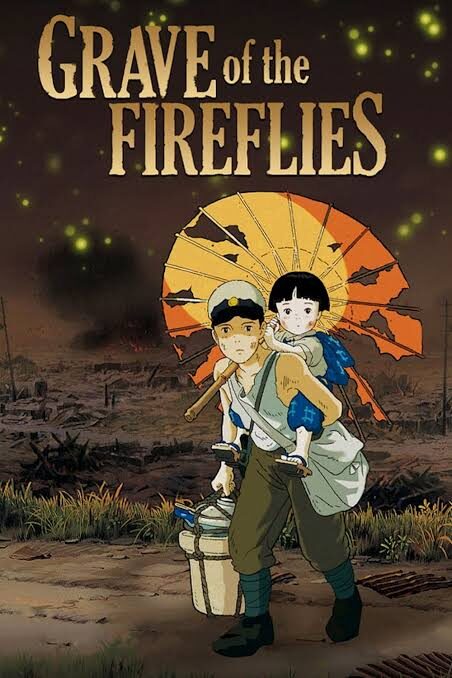
1. Grave of the Fireflies
1988 film · Studio Ghibli
If one anime has to be called the saddest ever made, this has the strongest case. Set in the final months of the Second World War, it follows siblings Seita and Setsuko trying to survive after their home is destroyed.
Read more
No supernatural powers. No plot twist. No heroic rescue. Two children trying to find food, stay together and stay alive — and that realism is exactly what makes it devastating. Because the story is rooted in the actual conditions of war rather than invented tragedy, its sadness carries a weight most fiction cannot reach. It is beautiful, unbearable, and almost impossible to forget.
Why it hurts: There is no fantasy escape from what these characters are living through.
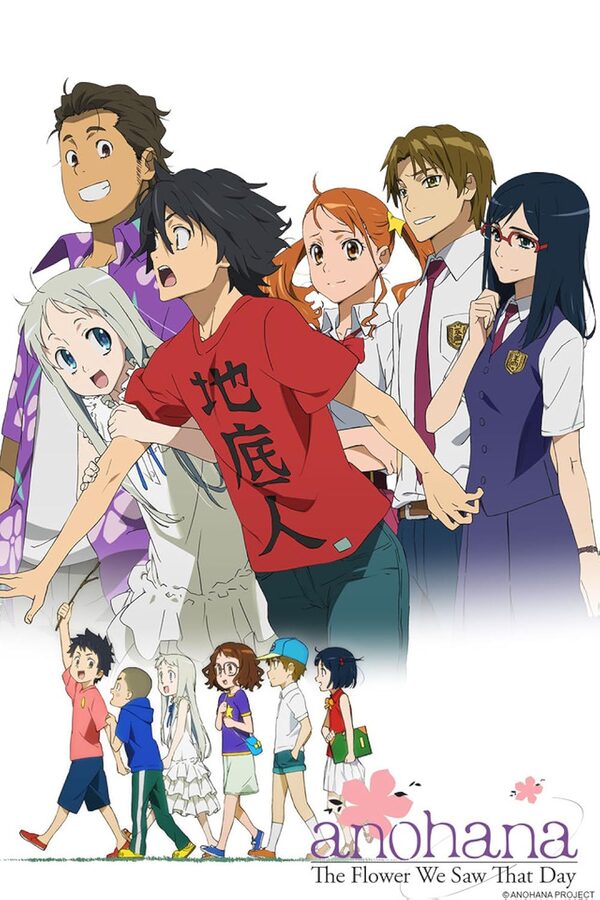
2. Anohana: The Flower We Saw That Day
11 episodes
A group of childhood friends drift apart after the death of their friend Menma. Years later, Jinta starts seeing her ghost — and her return forces the old group back together.
Read more
Menma died years before the story begins, but emotionally none of them ever left that day. Each carries a private version of the same guilt, and reuniting drags all of it to the surface. The series gradually reveals what actually happened, and the final episodes land an ending that has become genuinely legendary among anime fans. It is about realising that moving forward does not have to mean forgetting someone.
Why it hurts: Everyone is grieving differently, and nobody knows how to say what they actually feel.
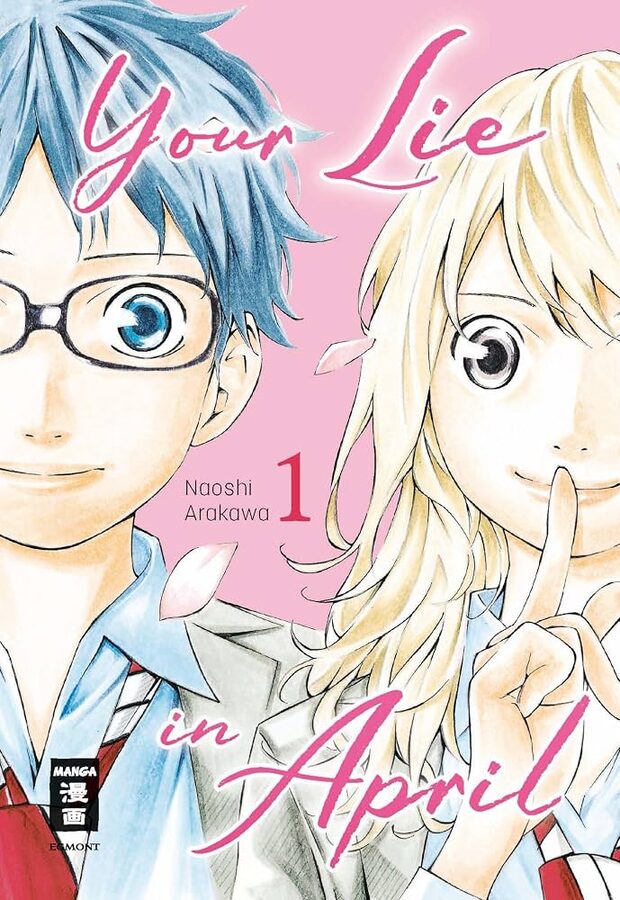
3. Your Lie in April
22 episodes
Kousei Arima is a piano prodigy who stopped being able to hear his own playing after his mother died. Years later he meets Kaori Miyazono, a violinist who drags him back toward music.
Read more
It does not rely on one tragic event — it spends 22 episodes building the relationships between Kousei, Kaori, Tsubaki and Watari so that by the end you have spent enough time with them for everything to feel personal. The music does the heavy lifting: performances stop being performances and become the things the characters cannot say out loud. That final stretch is brutal.
Why it hurts: The whole story feels like a beautiful memory you already know you are going to lose.

4. Cyberpunk: Edgerunners
10 episodes · Studio Trigger
David Martinez starts as a teenager trying to survive in Night City. After tragedy pushes him into the world of mercenaries known as edgerunners, everything about his life accelerates.
Read more
It mixes spectacular action with a surprisingly tender story about ambition, love, friendship and sacrifice, and by the end the flashy cyberpunk surface has become secondary to the people you have grown attached to. Sometimes the saddest stories are the ones where you understand from the first episode that the world is not going to let everyone win. If you have somehow avoided spoilers, watch it before reading anything else about it.
Why it hurts: The characters dream of escaping, and the world they live in does not allow it.

5. Fruits Basket
63 episodes (2019–2021)
At a glance Fruits Basket looks like a light romantic comedy. It is not. The series slowly reveals the trauma, abuse, loneliness and family dysfunction shaping nearly everyone in it.
Read more
Tohru Honda’s kindness works as a force in the story precisely because she does not fix anyone. She gives damaged people somewhere they can finally be accepted, which turns out to be a much harder and more valuable thing. The later arcs deal directly with generational trauma and how difficult it is to break a cycle you were born inside.
Why it hurts: Its saddest moments are not about death — they are about characters realising how long they have been hurting.

6. Clannad: After Story
24 episodes
Clannad begins as a school romance. After Story turns it into something far larger, following Tomoya and Nagisa past high school into adulthood, work, marriage and family.
Read more
What makes it devastating is that its problems sit much closer to real life than the usual anime tragedy. Love is not enough to prevent disaster. Family does not guarantee happiness. Growing up means accepting that life can change without warning and without meaning. Fans consistently place After Story among the anime that hit them hardest, and it is usually the second half people are talking about.
Why it hurts: It is not only about losing someone. It is about everything before and after the loss.
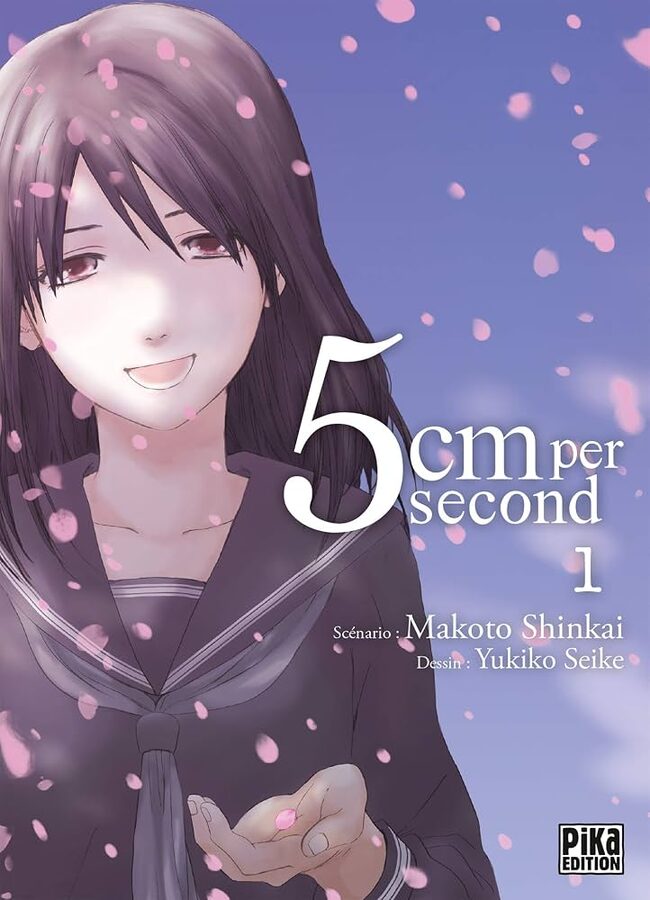
7. 5 Centimetres per Second
2007 film · Makoto Shinkai
Three connected shorts follow Takaki and Akari from childhood into adulthood as distance, time and circumstance slowly pull them away from each other.
Read more
There is no illness, no accident and no villain — which is exactly why it hurts. The film is about the specific grief of a relationship that never ended so much as faded, and about carrying that for years afterwards while life moves on around you. The final sequence is one of the most quietly crushing endings in anime, and it works because absolutely nothing extraordinary happens in it.
Why it hurts: Nothing dramatic goes wrong. Two people simply drift apart, the way people actually do.

8. Violet Evergarden
13 episodes + film
Violet is a former child soldier who cannot understand emotion after the war. She becomes an Auto Memory Doll, writing letters for people unable to express their own feelings.
Read more
Each assignment hands her someone else’s story — love, regret, loss, family, goodbye — and through writing other people’s feelings she slowly starts recognising her own. The series is famous for its standalone episodes, and Episode 10 in particular is the one people warn each other about. Few anime look this beautiful, and that beauty is exactly what makes the emotional moments land harder.
Why it hurts: It does not just make you cry. It makes you think about why you are crying.
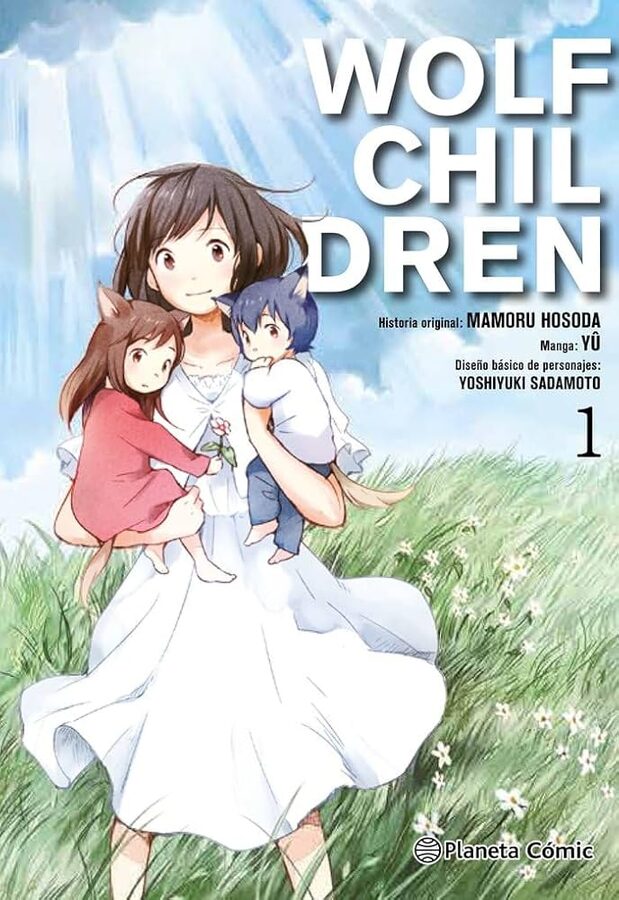
9. Wolf Children
2012 film · Mamoru Hosoda
Hana falls in love with a man who can turn into a wolf. After his death she raises their two half-wolf children alone, moving to the countryside so they can grow up choosing what they want to be.
Read more
It is not built around a single tragedy. It is a film about single parenthood, exhaustion, and the slow accumulation of moments where your children need you a little less than they did before. The sadness comes from how ordinary it is: every parent eventually watches a child walk away, and this film simply refuses to soften that.
Why it hurts: Loving someone properly can mean letting them leave.
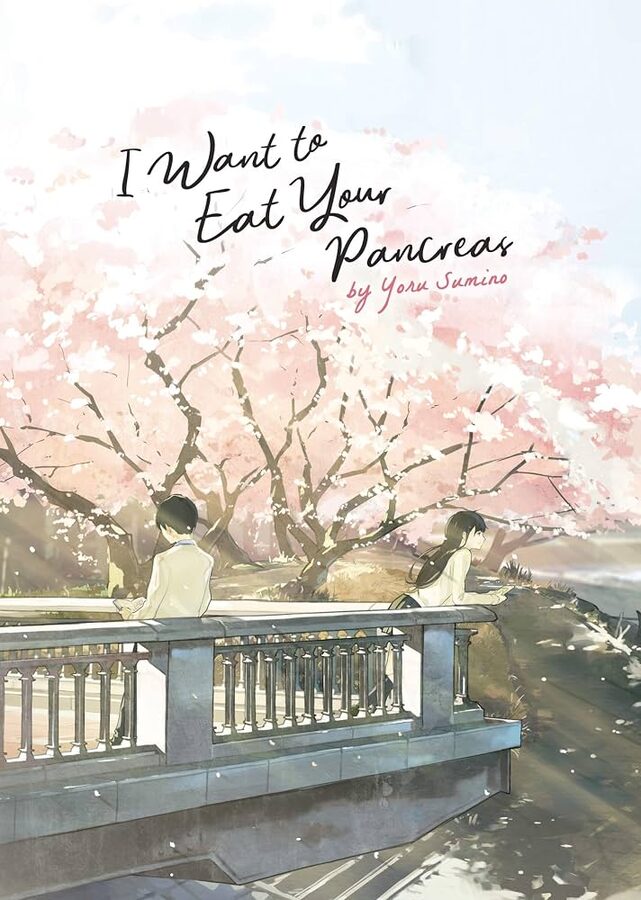
10. I Want to Eat Your Pancreas
2018 film
A socially withdrawn student discovers that his classmate Sakura Yamauchi is secretly living with a terminal illness. Despite having nothing in common, the two gradually become close.
Read more
The title sounds bizarre and the story is anything but. Unlike most romances, it is not really about whether the two will end up together — it is about what it means to genuinely connect with someone when time is limited, and what that connection leaves behind. Fans regularly cite it alongside Your Lie in April and A Silent Voice as one of the modern emotional heavyweights.
Why it hurts: It makes ordinary moments feel unbearably precious.

11. Made in Abyss
Anime series + films
Riko descends into a vast, beautiful pit to find her mother, accompanied by a robot boy named Reg. The deeper they go, the less the world cares whether they survive it.
Read more
Its art style is soft and storybook-bright, which is precisely the trap — the Abyss punishes its characters with a consistency that borders on cruelty, and the series never flinches or looks away. The Nanachi and Mitty sequence is regularly named one of the most upsetting stretches in modern anime, and it earns that reputation honestly rather than through shock alone.
Why it hurts: The prettiest show on this list is also the cruellest.
12. March Comes in Like a Lion
44 episodes
Rei Kiriyama is a talented young shogi player who has isolated himself from almost everyone around him. His slow relationship with the Kawamoto sisters gives him something he badly needs.
Read more
There is no single devastating twist. Instead the series works through loneliness, depression, family breakdown, bullying and the difficulty of finding anywhere you belong, at a pace that lets each of those land properly. It has been widely praised for how carefully it handles mental health and bullying, particularly across its second season.
Why it hurts: Its sadness feels realistic rather than manufactured.
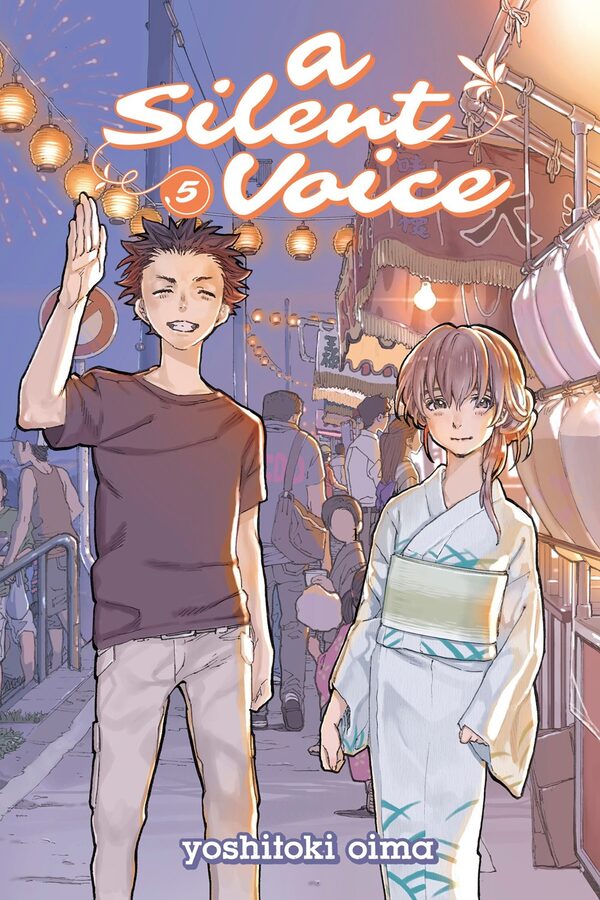
13. A Silent Voice
2016 film
Shoya Ishida spends his childhood bullying Shoko Nishimiya, a deaf girl who transfers into his class. Years later he is isolated, friendless and haunted by what he did.
Read more
It is not simply a sad romance — it is a film about bullying, guilt, isolation, forgiveness and whether redemption is something you are owed or something you have to build. Its real strength is understanding that people can cause serious harm without grasping what they are doing, and that changing afterwards is neither quick nor comfortable.
Why it hurts: It feels painfully human.
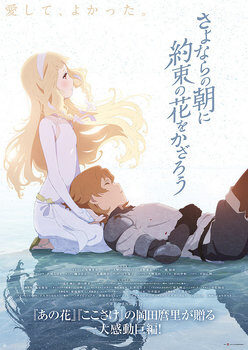
14. Maquia: When the Promised Flower Blooms
2018 film
Maquia belongs to a race that barely ages. She adopts an abandoned human baby and raises him — and as the boy grows into a man, she stays exactly as she was.
Read more
The premise sounds like fantasy and plays out as one of the most painful relationships imaginable: a mother watching her child overtake her, grow old, and eventually leave her behind while she remains untouched. It is a film about the fact that loving someone mortal has an ending built into it from the first day.
Why it hurts: It turns the ordinary passage of time into something unbearable.
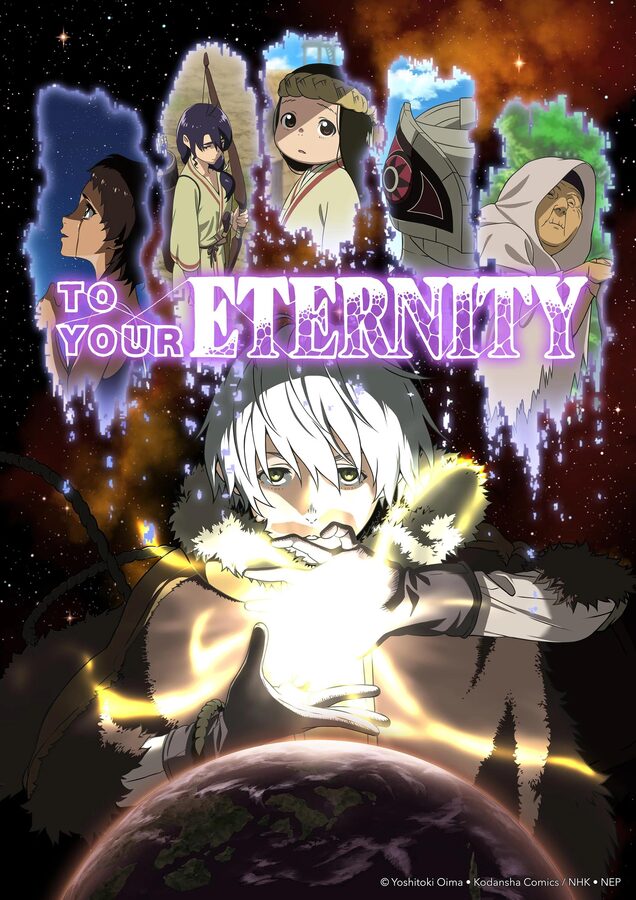
15. To Your Eternity
Anime series
An immortal being called Fushi is sent into the world with no understanding of it. He learns what living means by meeting people — and by losing them.
Read more
Few anime build an emotional attachment as fast as this one does; the opening episodes alone are regularly singled out as some of the most upsetting television in the medium. The structure is the cruelty: the series repeatedly introduces someone you come to care about, gives them just enough time, and then takes them away while Fushi carries on. It does this again and again, on purpose.
Why it hurts: Fushi keeps living. Everyone he loves keeps disappearing.
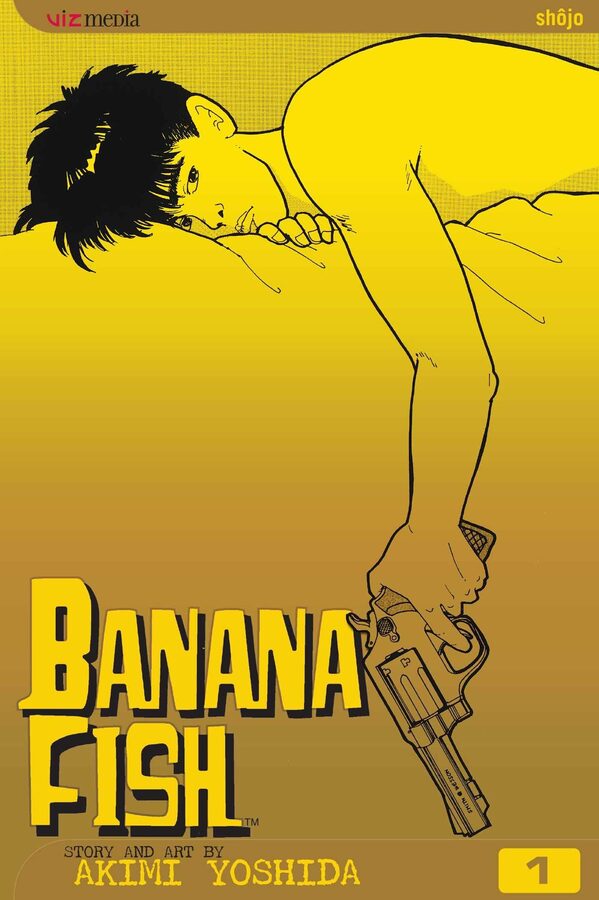
16. Banana Fish
24 episodes
Ash Lynx is a teenage gang leader in New York whose life has been defined by abuse and violence. His friendship with Eiji Okumura becomes the emotional centre of an increasingly dangerous story.
Read more
This is not a traditional tearjerker — it is a violent crime drama with gangs, conspiracy and manipulation running through it. What makes it hurt is the contrast: Eiji represents an ordinary life Ash can see clearly and cannot reach, and the series is honest about how difficult escape actually is for someone with his history.
Why it hurts: It keeps asking whether people shaped by terrible things can ever get out from under them.
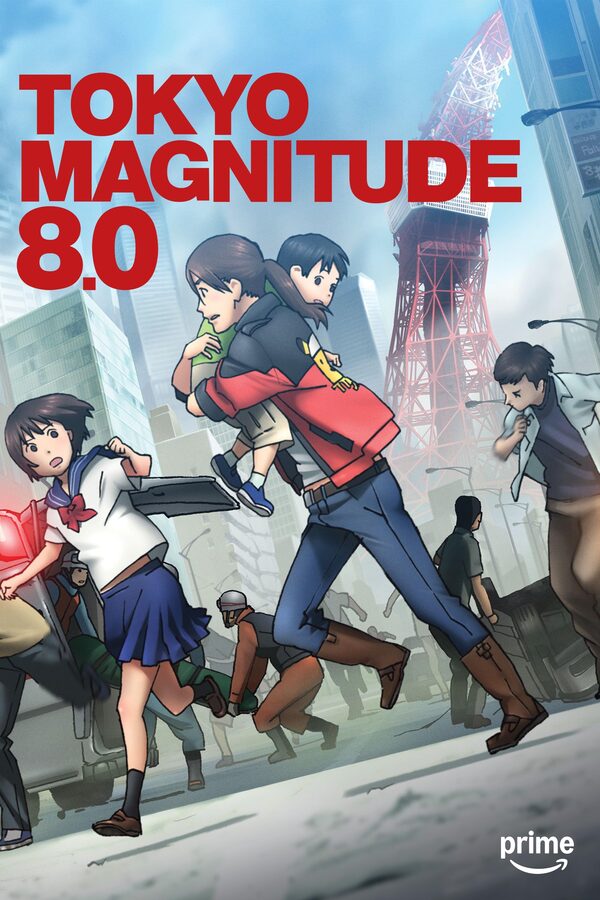
17. Tokyo Magnitude 8.0
11 episodes
A magnitude 8.0 earthquake strikes Tokyo while Mirai and her younger brother Yuuki are at an exhibition on the bay. The series follows their long walk home.
Read more
There is no spectacle for its own sake. It is a carefully researched, unusually restrained series about ordinary people getting from one side of a broken city to the other, and the way disaster reshapes a family. It is best watched without reading anything about the ending — the turn it takes is one of the most quietly devastating in anime, precisely because it is handled without any drama at all.
Why it hurts: It is about the part after the disaster, when everyone is expected to carry on.
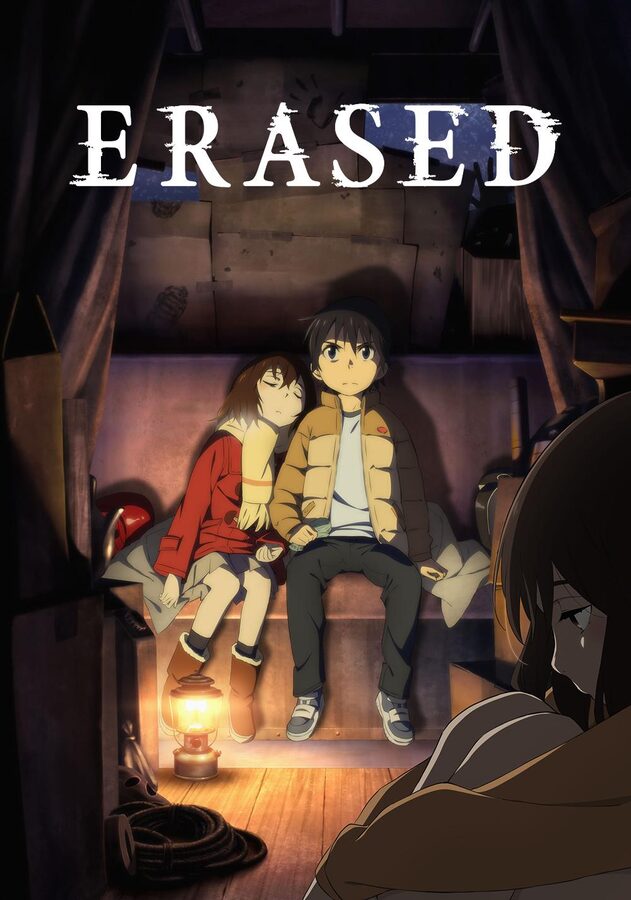
18. Erased
12 episodes
Satoru Fujinuma is involuntarily sent back in time whenever a tragedy is about to happen. When someone close to him is murdered, he is thrown much further back than usual — to his own childhood.
Read more
Suddenly he has a chance to prevent a series of crimes that shaped his entire life. The emotional weight comes less from the thriller plot than from watching an adult try to protect children who could not protect themselves, knowing exactly what happens if he fails.
Why it hurts: It is not really about solving a mystery. It is about wishing you could go back and save someone.
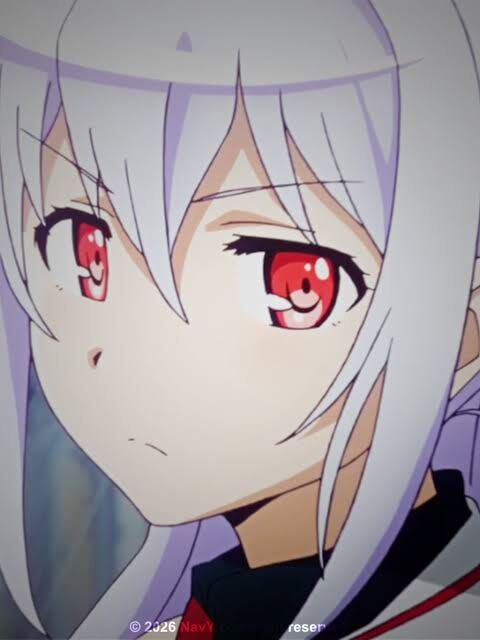
19. Plastic Memories
13 episodes
In a near future, androids called Giftias develop real personalities but have a fixed lifespan. Tsukasa joins the company that recovers them before they expire, and is partnered with Isla.
Read more
Imagine falling in love with someone while knowing the exact date you lose them. The series builds their relationship slowly while never once letting you forget the deadline, which turns every ordinary scene into something you are already grieving in advance.
Why it hurts: The tragedy is not a surprise. You are watching a clock the whole time.

20. Angel Beats!
13 episodes
A group of teenagers exist in an afterlife high school, refusing to move on. It looks at first like a strange mix of comedy, action and school life.
Read more
Then it starts explaining why each of them is there. Behind the jokes is a story about unresolved regret and eventually being able to let go, and the series can move from genuinely funny to devastating within a single scene — which is exactly what makes it work.
Why it hurts: They are not fighting an enemy. They are fighting the things they never resolved while alive.
Which one will make you cry the most?
It depends entirely on which kind of sadness reaches you.
| If you want | Watch |
|---|---|
| Devastating, no escape | Grave of the Fireflies |
| Romance and heartbreak | Your Lie in April |
| Grief and friendship | Anohana |
| Family tragedy | Clannad: After Story |
| Beautiful and quietly sad | Violet Evergarden |
| A film, not a series | I Want to Eat Your Pancreas |
| Brutally modern | Cyberpunk: Edgerunners |
| Realistic and psychological | March Comes in Like a Lion |
| Something that hurts immediately | To Your Eternity |
| Sadness with no villain | 5 Centimetres per Second |
Frequently asked questions
What is the saddest anime ever made?
Grave of the Fireflies. It is the title that appears most consistently whenever anime fans have this argument, and its power comes from realism rather than tragedy engineered for effect.
What is the saddest anime series, not film?
Clannad: After Story or Your Lie in April, depending on whether you want family tragedy or romantic heartbreak. Both build across a full season before landing the blow, which is why they hurt more than a two-hour film for many viewers.
Is Grave of the Fireflies based on a true story?
It is based on a semi-autobiographical short story by Akiyuki Nosaka, who lost his younger sister to malnutrition during the war. That is a large part of why it feels less like fiction than most anime about war.
Which sad anime should I watch first?
Your Lie in April if you want beauty with the sadness, A Silent Voice if you want something human and hopeful, and Grave of the Fireflies only when you are ready for it. It is not a film to put on casually.
Are there sad anime with happy endings?
Yes. A Silent Voice, March Comes in Like a Lion and Fruits Basket all put their characters through a great deal and let them come out the other side. The sadness is in the journey rather than the ending.
Final thoughts
The stories that stay with us are the ones that made us care first. That is why Your Lie in April can hurt so much, why Anohana resonates with anyone who has lost someone, why Violet Evergarden can turn a letter into something unbearable, and why Grave of the Fireflies remains so difficult to watch with no spectacle in it at all.
Every anime fan has the one series that completely took them apart. For some it is Clannad. For others Your Lie in April, or Violet Evergarden, or something nobody else has heard of.
More rankings: our 50 strongest anime characters, the top 100 best anime of all time, and the best anime fights of 2026.
What is the saddest anime you have ever watched?
Your Lie in April? Clannad? Anohana? Violet Evergarden? Grave of the Fireflies? Or something this list missed entirely? Tell us in the comments — and if you are planning to marathon several of these in one weekend, do not blame us when Monday arrives.